Not speaking a child’s home language doesn’t disqualify you from assessing them properly. It changes what “proper” looks like—and makes doing it well more defensible than trying to test in English alone.
There’s a particular kind of dread that comes with opening a referral and seeing a home language you don’t speak. Arabic, Polish, Urdu, Yoruba, it doesn’t matter which one. You know the child deserves a proper assessment. You also know that most of your training, and most of your test cabinet, was built around English monolingual norms. That gap is real, it’s common, and it’s not a reason to freeze or to quietly default to “assess in English and hope for the best.”
Here’s what a defensible, genuinely useful assessment looks like when you don’t share the child’s language.
Are you the only one in this position?
If it feels like you’re improvising, you’re in good company. Survey after survey of school-based SLPs finds the overwhelming majority are still using tools normed on monolingual, English-speaking children with bilingual caseloads, one recent survey put the figure at 98%.[1] This isn’t a personal failing. It’s a structural gap in how the profession has been resourced, and the fix is a set of practical adjustments, not a language degree.
Where do you start? The case history.
Before any test comes out, you need a real picture of the child’s language history: which languages are spoken at home and by whom, roughly how much exposure to each, when the second language started, and how the child communicates day to day in each setting. ASHA’s own practice guidance is direct that reviewing this history is the step that determines which language, or languages, the assessment should actually happen in.[2] Under IDEA in the US, evaluations are required to happen in the child’s native language unless that’s genuinely not feasible, this isn’t just best practice, it’s a legal standard.[2]
Why not just use a translated standardized test?
Running an English-normed standardized test on a child who doesn’t have full English exposure yet will not tell you what you need to know, and reporting a standard score from it is not defensible. ASHA’s own guidance is explicit here: if a tool has been translated, or used with a population it wasn’t normed on, you don’t report a standard score, you give a narrative description of performance instead, and you note the modification clearly in your report.[3] It’s a small habit that makes a real difference to how much weight a diagnosis can carry.
Who should you bring into the assessment? A trained interpreter.
A bilingual teaching assistant or a parent doing their best is not the same as a trained interpreter, and ASHA’s clinical management guidance specifically supports using interpreters when the assessing clinician doesn’t have the needed language competence.[4] A workable structure many SLPs use is brief, intervene, debrief: prepare the interpreter on what you’re testing and why before the session, work alongside them during it, and review the session together afterwards to check nothing got lost or reframed in translation.[5] All clinical judgement stays with you, the interpreter’s role is to be an accurate bridge, not to make the call.
How do you make sense of a language sample you don’t speak?
Wherever you can, a connected speech or narrative sample in each of the child’s languages tells you far more than a single-word list. This is the point where a lot of SLTs get stuck: if you don’t speak the language, how do you actually interpret what’s in the sample? The answer is that you don’t do it alone. Record the sample, then sit down with your interpreter afterward and go through it turn by turn, asking specifically whether each utterance or error looks typical for a child that age in that language or looks unusual.[6] The interpreter tells you what’s linguistically typical or atypical, but the clinical judgement, whether a pattern reflects limited exposure versus a genuine disorder, stays with you, not the interpreter.[6] ASHA’s practice portal is a useful reminder here too: skills won’t map neatly across two languages, phonological systems, morphology, and syntax all develop on their own timelines depending on the languages involved, so it’s the pattern across both languages together, read with your interpreter’s help, that points you toward typical variation versus disorder, not a direct side-by-side score comparison.[7]
What assessment measures work better across languages?
Standardized vocabulary and grammar tests are heavily shaped by exposure, which is exactly what makes them unreliable for a child who’s simply had less time with English. Nonword repetition tasks are one of the better-evidenced alternatives: a systematic review and meta-analysis found they reliably help distinguish developmental language disorder from language difference across both monolingual and bilingual children, because repeating an invented word draws on underlying phonological processing rather than vocabulary a child may or may not have been exposed to yet.[8][9] Dynamic assessment, testing a skill, teaching it briefly, then retesting to see how much the child gains from that teaching, is another well-supported option, since it measures learning capacity rather than existing knowledge.[10]
Why reach out to multilingual colleagues?
None of this has to happen alone. Speech and language therapy tends to be a genuinely collaborative field, and best-practice guidance on bilingual service delivery explicitly points monolingual clinicians toward building a collaborative team around a case, drawing in bilingual colleagues, paraprofessionals, and family members rather than trying to cover every language single-handedly.[11] In practice, that often just means messaging a multilingual SLT or SLP you know, or one you find through a professional network, and asking a specific question: does this sound like a typical error pattern in this language at this age, or not. More often than not, they’re happy to help, usually for nothing more than the goodwill of it. The field’s own reference materials for working across languages an individual clinician doesn’t speak are themselves built this way, one widely used tutorial on assessing multilingual children was written by a volunteer international panel of 46 researchers and SLPs, spanning 43 countries and 27 languages, pooling their expertise and giving it away freely to colleagues who need it.[12] It’s worth treating that kind of collaboration as a normal, expected part of the process, not a favour you’re reluctant to ask for.
What’s the gap for Arabic caseloads specifically?
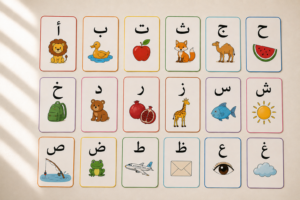
This is where the gap gets very concrete. There’s no shortage of English phonology screens. There is a real shortage of properly built Arabic ones, which leaves SLTs either improvising with translated English materials or falling back on English-only testing for a child who’s never had full English immersion, neither of which holds up.
If Arabic is part of your caseload, our Arabic Phonology Screen was built to close exactly this gap: a proper phonological assessment in the child’s actual home language, not an adapted English one.
The bottom line
Not sharing a child’s language doesn’t disqualify you from a proper assessment, it just changes what “proper” needs to include: a thorough language history, an interpreter used well, a sample from every language the child speaks, made sense of together rather than alone, and measures that don’t quietly penalise a child for having had less time with English. None of that requires fluency in the child’s language. It requires being deliberate about the parts of the process that fluency would otherwise have covered for you.
References
- medRxiv preprint. Why did you use that test? Exploring speech-language pathologists’ clinical decision-making in bilingual language and literacy assessment.
- American Speech-Language-Hearing Association. Practice Portal: Collaborating With Interpreters, Transliterators, and Translators.
- ASHA Leader. Answers to Your FAQs About Multilingual Assessment.
- American Speech-Language-Hearing Association. Practice Portal: Collaborating With Interpreters, Transliterators, and Translators.
- Perspectives of the ASHA Special Interest Groups. Guidance on the Effective Collaboration With Interpreters and Translators in Speech-Language Pathology.
- Bilinguistics. Using interpreters for speech-language evaluations.
- American Speech-Language-Hearing Association. Practice Portal: Multilingual Service Delivery in Audiology and Speech-Language Pathology.
- Journal of Speech, Language, and Hearing Research. Using Nonword Repetition to Identify Developmental Language Disorder in Monolingual and Bilingual Children: A Systematic Review and Meta-Analysis.
- Journal of Speech, Language, and Hearing Research. A Framework for Crosslinguistic Nonword Repetition Tests: Effects of Bilingualism and Socioeconomic Status on Children’s Performance.
- Language, Speech, and Hearing Services in Schools. Dynamic Assessment of Word Learning Skills: Identifying Language Impairment in Bilingual Children.
- Perspectives of the ASHA Special Interest Groups. Guidance on the Effective Collaboration With Interpreters and Translators in Speech-Language Pathology.
- American Journal of Speech-Language Pathology. Tutorial: Speech Assessment for Multilingual Children Who Do Not Speak the Same Language(s) as the Speech-Language Pathologist.