Bilingualism doesn’t cause speech delays, but it does change what typical looks like—and that confusion leads to both missed diagnoses and unnecessary referrals. Here’s how to tell the difference.
If you’ve ever sat across from a worried parent and heard “but he’s bilingual, maybe that’s just it,” you know how much weight that one sentence carries. It’s a reasonable question. It’s also one of the most persistent myths in our field, and it can go two ways: it can talk a real delay out of getting help, or it can send a perfectly typical bilingual kid into an unnecessary referral.
So let’s get the science straight, and then talk about what it actually means for assessment.
Does bilingualism cause speech or language delays? No.
Learning two languages at once is not a risk factor for speech or language disorder. ASHA is direct about this on its own public milestones pages: learning multiple languages will not cause speech or language problems.[1] Bilingual children reach their major communication milestones on a similar timeline to monolingual children.[2] If a child has a genuine speech sound disorder or language disorder, bilingualism didn’t create it, and dropping a language won’t fix it either. There’s no research evidence that reducing input to one language helps a child who’s struggling, and it can cost a family real connection to culture and relatives for no clinical benefit.[3]
What bilingualism does do is change the shape of what typical looks like. That’s the part that trips people up.
What does typical bilingual development actually look like?
A few things are completely normal in bilingual kids and get mistaken for problems constantly:
- Smaller vocabulary in each individual language, but a comparable combined vocabulary. A child might have fewer English words than an English-only peer, but count both languages together and the total is usually in range.[2]
- Code-switching. Mixing words or grammar from both languages mid-sentence isn’t confusion. It’s a normal, well-documented feature of bilingual development, often just a child reaching for whichever word arrives first.[3]
- A silent period. Some children go quiet for a stretch when a second language starts (applies only to sequential bilingual learners), especially if it began later (say, on starting nursery or school). This isn’t regression, it’s typical.
None of this, on its own, is a red flag. The red flags look different.
When should you suspect a real disorder, not just bilingualism?
A bilingual child can absolutely have a genuine delay or disorder, for all the same reasons a monolingual child can:
- Recurrent ear infections reducing hearing during key windows of development
- Hearing loss, even mild or partial
- Developmental Language Disorder (DLD), unrelated to how many languages a child speaks
- Autism spectrum differences, which need their own dedicated evaluation
- Structural factors, like a tongue-tie affecting articulation
- Low overall language input, regardless of how many languages that input is split across[3]
The single most useful diagnostic principle here: a true disorder shows up in every one of a child’s languages, not just one. As one CCC-SLP puts it, a genuine delay will be evident in both a child’s languages, not caused by acquiring two of them in the first place.[4] If a child is communicating confidently and appropriately in Arabic at home but struggling only in English at school, that’s much more likely to be a difference in exposure than a disorder. If the difficulty is there across the board, in every language, that’s worth a proper look.
What are the red flags, by age?
These aren’t a diagnosis on their own, but they’re a reasonable prompt to take a closer look, counting words and skills across all of a child’s languages combined. ASHA’s own public milestone guidance and the CDC’s “Learn the Signs. Act Early.” program are good general reference points:[1][5]
- 12 months: no babbling, no pointing, no response to their name
- 18 months: using far fewer words than expected in total, across all languages combined, and not yet following simple one-step directions[1]
- 24 months: not yet combining two words together in any language[6]
- Any age: a loss of skills the child previously had, or persistent, obvious frustration trying to communicate
What does this mean for assessment?
For families, the message is simple: bilingualism isn’t the problem, and it’s not something to quietly retreat from.
For SLTs and SLPs, it’s a bit more involved. Research on assessment practice keeps landing on the same finding: a large majority of clinicians still lean on tools and norms built for monolingual populations when assessing bilingual children, one survey of school-based SLPs put the figure at 98%.[7] A 2023 study in the Journal of Speech, Language, and Hearing Research found this cuts both ways, over-identifying typical bilingual variation as disorder, and under-identifying real disorder that a monolingual-normed test wasn’t built to catch.[8] A thorough case history covering both languages, input from parents or caregivers on how the child communicates at home, and, wherever possible, assessment in both of a child’s languages rather than just the majority one, all matter more here than they would with a monolingual caseload.[9]
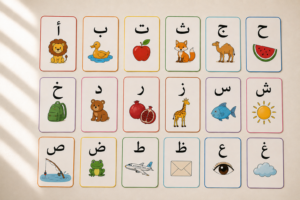
That’s exactly the gap tools like a dedicated Arabic Phonology Screen are built to close: assessing speech sounds in the child’s actual home language, rather than trying to infer a picture from English performance alone.
The bottom line
Bilingualism is not a diagnosis, and it’s not an excuse to dismiss a genuine concern either. The question was never “is this child bilingual.” It’s “does this show up in all of their languages, and does it match what we’d expect at this age.” Get that right, and the “is it just bilingualism” conversation gets a lot easier to have.
References
- American Speech-Language-Hearing Association. Communication Milestones: 19 to 24 Months; Communication Milestones: 13 to 18 Months.
- Raising Children Network. Language delay in children.
- The Multilingual Garden. Bilingual Child Speech Delay: Normal vs. When to Worry.
- Expressable. Do Bilingual Children Have Language Delays?
- Centers for Disease Control and Prevention. Learn the Signs. Act Early. developmental milestones program.
- American Speech-Language-Hearing Association. Communication Milestones: 19 to 24 Months.
- medRxiv preprint. Why did you use that test? Exploring speech-language pathologists’ clinical decision-making in bilingual language and literacy assessment.
- Journal of Speech, Language, and Hearing Research. Exploring Assumptions of the Bilingual Delay in Children With and Without Developmental Language Disorder.
- American Journal of Speech-Language Pathology. Tutorial: Speech Assessment for Multilingual Children Who Do Not Speak the Same Language(s) as the Speech-Language Pathologist.